
Becoming an Expat
Nobody tells you about the silence after the honeymoon ends.
You moved abroad for a reason — adventure, love, work, a fresh start. And for a while it worked. The newness was intoxicating. A different skyline, a different coffee, a different version of yourself.
And then one day the noise came back.
Because no matter where you go, there you are.
The problems you thought you’d left behind didn’t stay in the old city. They just waited. The childhood stuff. The relationship strain. The work frustration. The creeping sense that something isn’t quite right and you can’t explain it to anyone because everyone back home thinks you’re living the dream.
And now you’re in a country where you might not speak the language fluently, where the bureaucracy defeats you, where making real friends takes years, and where the version of yourself you were trying to escape has followed you here and is somehow louder than before.
That’s not weakness. That’s what happens when you’re human and far from home.
And that’s exactly what online therapy was built for.
Why Online Therapy Works Differently for Expats
Finding a therapist in your city is one thing. Finding one who speaks your language fluently enough to catch the nuance — the irony, the self-deprecation, the cultural shorthand — is something else entirely.
And finding one who actually understands what it means to live abroad? That’s the rarest thing of all.
Because speaking English to an English-speaking therapist who has never left their home country is not the same as speaking to someone who knows what it feels like to navigate a bureaucracy in your second language, to celebrate Christmas away from your family for the seventh year in a row, to feel guilty for loving your life here while simultaneously grieving the one you left behind.
Online therapy removes geography from the equation entirely. You are no longer limited to whoever happens to have a practice within commuting distance. You can find the therapist who gets it — who has lived it, who understands that expat life is not a holiday, and who knows that what started as temporary has quietly become your life.
Because that’s the part nobody warns you about. You came for two years. It’s been nine. Your kids are in school here. Your partner has built a career here. And somewhere along the way, here became home — except home never quite feels like home either.
That specific disorientation deserves a specific kind of support.
What to Expect from Online Therapy as an Expat
Before your first session, sort two things: privacy and technology.
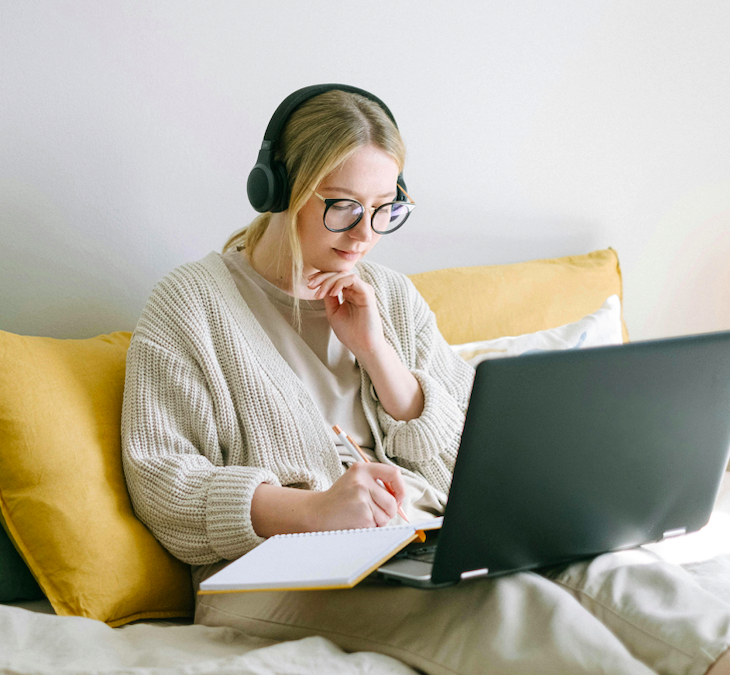
Find a space where you won’t be interrupted — not the kitchen while your partner makes dinner, not a coffee shop if you can avoid it. Somewhere you can say the hard things out loud without one ear on the door. If you live with others, headphones help. So does a white noise app outside the room.
But here’s the thing — if your car in a car park is the only private space you have right now, use the car park. If your bathroom is the only room with a lock on the door, sit on the edge of the bath. If the park is where you feel most free to talk, walk and talk with your earphones in. Nobody will notice. Nobody will care. You just look like someone on a phone call — which is basically what you are, except this one might change your life.
The point is this: there is almost always a solution. Privacy is important but it doesn’t have to be perfect. What matters is that you show up.
Check your technology works before the session, not during it. If your therapist sends a Zoom link, open Zoom before the session starts. Check your internet connection. These things sound obvious until you’re sitting there five minutes in, frozen on screen, trying to explain your childhood trauma via the chat function.
Once that’s sorted — what you can expect is this:
To feel less alone. Often faster than you expected.
Good online therapy moves. It doesn’t meander. You don’t spend six sessions establishing whether you’re comfortable enough to begin. You begin. And because you’re in your own space, in your own language, with a therapist who understands your specific life — the walls come down more quickly than you’d think.
You’ll leave sessions with something. A thought that wasn’t there before. Sometimes a homework assignment — something small to try, to notice, to sit with between sessions. And if you don’t do it, that’s fine too. You can’t fail therapy by not doing your homework.
But here’s the thing nobody tells you about online therapy. You don’t have to wait months for an appointment. You don’t have to go on a waiting list, navigate a referral system, or hope that the one English-speaking therapist in your city has a slot on a Tuesday afternoon that works around your commute.
You can book today. You can be in the room this week.
That’s not a small thing. When you finally decide you need help, the last thing you need is six weeks standing between you and the first session.
Couples Therapy Online: Particularly Powerful for Expat Relationships
Expat relationships have a specific kind of pressure that most couples therapists have never had to navigate personally.
One partner travels constantly for work. The other holds everything together at home in a country that isn’t theirs either. One of you got the exciting career opportunity. The other one came along and is still figuring out what that means for their own identity. You love each other but you are both quietly exhausted in ways that are hard to explain to someone who hasn’t lived it.
And then there are the international couples — two people from two different countries, two different cultural frameworks for how relationships are supposed to work, sometimes in a third country that belongs to neither of them. That is a specific kind of complexity that deserves a specific kind of support.
Online couples therapy removes the logistical nightmare entirely. One of you is in Munich. The other is in Singapore for the week. You can still have your session on Thursday evening. One of you is travelling every other week for work. Your therapy doesn’t have to stop because your schedule does.
Long distance couples — and there are more of them than anyone talks about, particularly across Europe — finally have access to couples therapy that actually fits their reality. You don’t have to be in the same room to do the work. You just have to be willing to show up to the same screen.
And sometimes, being slightly apart — each in your own space, each with your own camera — creates a safety that the shared consulting room doesn’t. You have just enough distance to say the thing you couldn’t say sitting next to each other on a couch.
Common Concerns About Online Therapy — Answered
Is it as good as in-person therapy?
For talk therapy — yes. The research confirms it repeatedly. And anecdotally, I have clients I have worked with for months, sometimes years, who finally visited my Munich office and walked in feeling like they were meeting an old friend. Because they were. The relationship built just as deeply over a camera as it would have across a room.
The webcam does not dilute the work. It changes the container, not the connection.
Will my therapist really be able to see what’s going on with me?
More than you’d think. Experienced online therapists learn to read what the camera gives them — your face, your voice, the pause before you answer, the moment you look away. We adapt. And if you see your therapist typing occasionally, don’t panic. Good therapists will tell you upfront that they take notes during sessions. It means they’re paying attention, not checking their emails.
Is it private and secure?
It should be. A reputable online therapist will use a secure, encrypted platform — not WhatsApp, not FaceTime, not a standard video call. Ask your therapist what platform they use and why. No session should ever be recorded without your explicit consent. And on your end, headphones and a private space go a long way.
What if I’m not tech savvy?
If you can make a video call, you can do online therapy. That’s genuinely all it takes.
How to Find the Right Online Therapist as an Expat
The hardest part of starting therapy is often not the therapy itself. It’s the decision of who to trust with the parts of yourself you’ve never said out loud to anyone.
That’s why fit matters so much. And that’s why PsyShrink exists.
PsyShrink is a carefully curated directory of English-speaking therapists across Germany and beyond — people who understand expat life, cultural dislocation, burnout, relationship strain, and what it means to live between worlds. Google recommends it for English-speaking therapy in Germany. More importantly, the therapists listed there are selected, not just submitted.
If you’re not sure where to start, you don’t have to figure it out alone.
You can book a free 15-minute consultation and speak directly with a psychologist — no commitment, no pressure, just a conversation about what you’re looking for and what kind of support might suit you best. If you’re not sure which therapist might be the right fit, speak directly with Cynthia. She’ll help you find the right person for your specific situation.
Because finding the right therapist shouldn’t be another thing on the list of hard things about living abroad.
It should be the thing that makes all the other hard things more manageable.
Find your therapist at PsyShrink.com
Or Book a free 15 min Consultation
Be kind to yourself.