
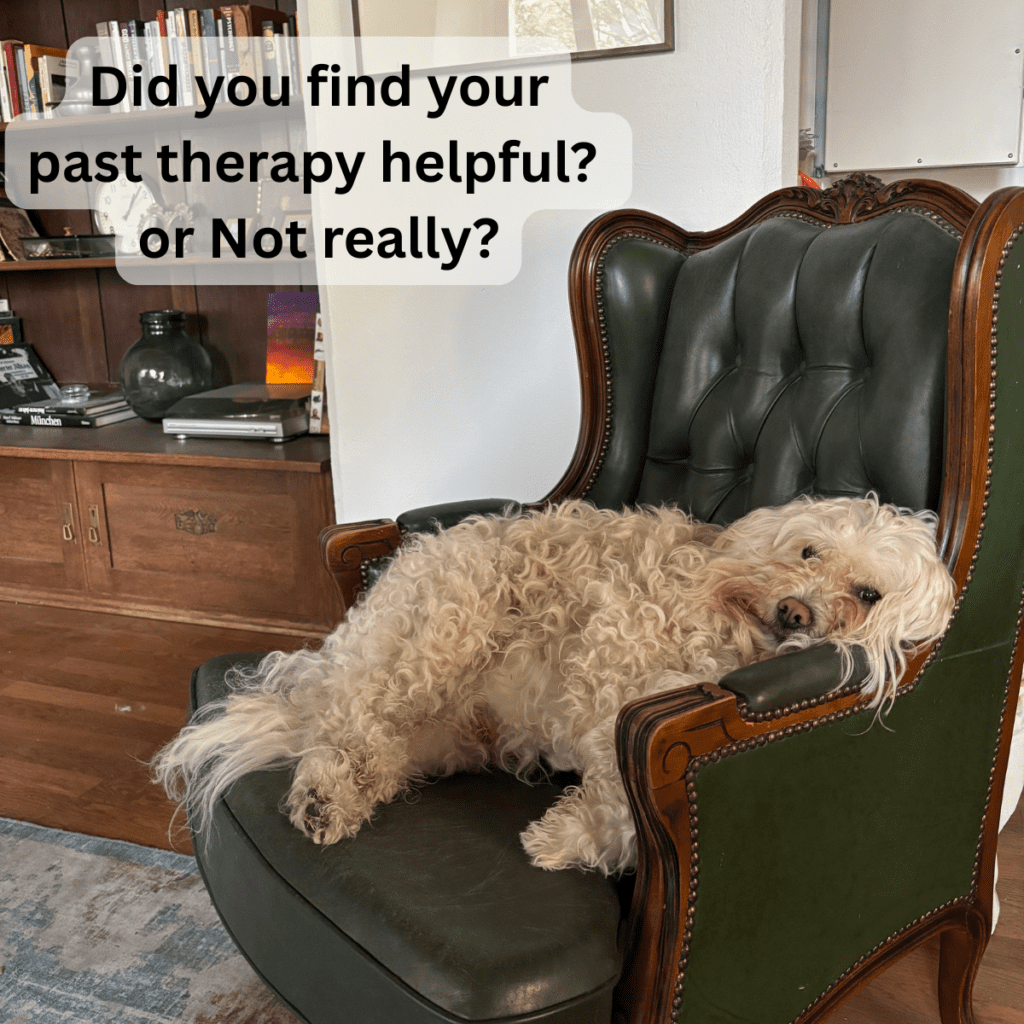
If you’ve ever sat in a therapist’s office and thought: therapy isn’t working — you’re not alone. And more importantly, you’re probably not wrong.
Therapy has an image problem. We’ve built an entire cultural narrative around it — go to therapy, do the work, get better. And when it doesn’t work, the assumption is almost always that the problem is the client. Not committed enough. Not ready. Not trying hard enough.
But after 25 years in the therapy room, I want to offer a different perspective.
Sometimes therapy doesn’t work because the therapy itself isn’t working.
The right person matters more than the right method
The research on this is actually quite clear. The single biggest predictor of therapeutic outcome isn’t the modality — it isn’t CBT versus psychodynamic versus EMDR. It’s the therapeutic relationship itself. The fit between client and therapist.
You can have the most technically proficient therapist in the room and still make no progress whatsoever if the relationship doesn’t have the right quality of trust, safety and challenge.
This is something the profession is surprisingly reluctant to say out loud. Therapists train in specific modalities and understandably believe in them. But the honest truth is that a warm, attuned therapist working in a modality that’s a reasonable fit will almost always outperform a cold, unaware therapist using the gold standard evidence-based approach.
The person matters more than the method. (You can read about our therapists here: PsyShrink Multilingual Team)
Therapists need therapy too — and not all of them get it
Here’s something that might surprise you. There is no universal requirement for therapists to be in their own therapy. Training programmes vary enormously on this. Some require it. Many don’t.
Which means the person sitting across from you — holding your most difficult material, your deepest shame, your oldest wounds — may never have sat in that chair themselves.
This matters enormously.
A therapist who hasn’t done their own work will unconsciously steer the conversation away from territory that makes them uncomfortable. Not deliberately. Not maliciously. But the avoidance happens. The client feels it — a subtle closing of doors, a slight shift in energy when certain topics arise — even when they can’t name it.
The best therapists I know are the ones still doing their own work. Not because they’re broken. Because they understand firsthand what it actually asks of a person to sit with the most difficult parts of themselves. That understanding changes everything about how they show up for their clients.
Insight alone is not enough
One of the most common patterns I see is what I’d call the articulate stuck person. They’ve been in therapy for years and can describe their patterns with impressive precision. They know exactly where their anxiety comes from, can trace their attachment style back to early childhood, understand the family dynamics that shaped them.
And nothing has actually changed.
Insight is necessary. It is not sufficient.
Talking about something and actually moving through it are completely different experiences. Some therapeutic approaches stay almost entirely in the cognitive, narrative space — understanding the story. Others work at the level of the nervous system, the body, the deeper patterns of perception and response.
If you’ve spent years understanding your pain without it shifting, it might be time to ask whether the approach itself needs to change.
You might just need a different therapist
This sounds obvious. It isn’t, emotionally.
Leaving a therapist feels disloyal. It feels like giving up. It can trigger exactly the same patterns that brought you to therapy in the first place — the difficulty disappointing people, the tendency to stay in situations that aren’t working, the habit of assuming the problem is you.
But one therapist not being right for you is not evidence that therapy doesn’t work. It’s evidence that that particular therapeutic relationship wasn’t the right fit.
The people who walk away from therapy entirely after a bad experience are often the ones who needed it most. It takes real courage to try again. But the right fit exists. The difference between the wrong therapist and the right one can be the difference between years of spinning and genuine, life-altering change.
So what do you do if therapy isn’t working?
Ask yourself honestly:
Do I feel genuinely safe in this room — safe enough to say the things I haven’t said yet?
Does my therapist challenge me, or do they mostly reflect and validate?
Am I making progress, or am I just getting better at describing the problem?
Has my therapist ever mentioned their own therapy, supervision, or continued development?
If the answers are making you uncomfortable — trust that. You are allowed to look for someone else. You are allowed to ask a potential therapist directly whether they have their own therapist. A good therapist will not be offended by the question.
Finding the right therapist
If you’re looking for an English-speaking therapist — whether you’re an expat, an international professional, or simply someone who thinks and feels most naturally in English — PsyShrink is a curated directory of vetted, multilingual therapists working across Europe and online.
Every therapist listed at PsyShrink.com has been selected not just for their qualifications but for their fit with the specific needs of internationally mobile, culturally complex clients.
Because you deserve a therapist who actually gets it.
Make an appointment Here: Online Bookings Calendar